
PPC Signal Alternatives for Complete Ad Performance Optimization
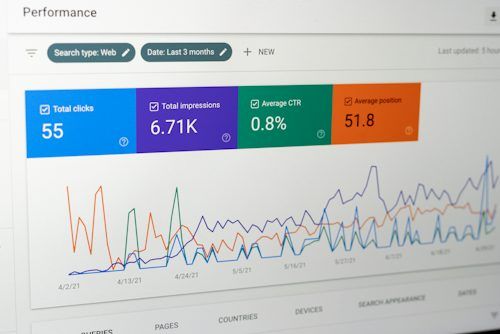
While tools like PPC Signal offer valuable anomaly detection for paid campaigns, they often stop at the click. The real signal that matters is conversion rate, and that happens after the click. PPC platforms vary in how they address campaign management and post-click performance: some specialize in advertising optimization, while others provide additional website or conversion-related tools. This guide examines seven alternatives across both sides of the equation, starting with the platform that connects ad landing pages with Google Search optimization recommendations in one workflow.
Key Takeaways
- Campaign management tools optimize traffic acquisition while landing page platforms work to convert that traffic into outcomes
- Quality Score is a diagnostic metric, but improving landing page relevance and usability can strengthen auction-time ad quality, potentially contributing to more competitive placement and lower costs alongside bids, competition, and other auction factors
- While Ryze AI, Optmyzr, and Opteo focus primarily on campaign optimization, Flint brings Google Search optimization recommendations and campaign-matched landing page generation into one workflow, with downstream outcomes incorporated where CRM or commerce data is connected
- Flint can generate campaign-matched landing page drafts in minutes, with A/B testing and conversion measurement that feed learnings back into future recommendations
- Many PPC tools concentrate on campaign management, while some, like Ryze AI, now add website capabilities. Flint focuses on dedicated, campaign-matched landing pages connected to Google Search optimization
The PPC optimization landscape spans two broad categories that many comparison guides conflate. Campaign management tools like Optmyzr, Opteo, and Adalysis focus on bids, budgets, keywords, and ad copy, while Ryze AI combines advertising management with website creation. Post-click tools address what happens after someone clicks: the landing page experience that influences whether that click becomes a lead, sale, or bounced session.
Understanding this distinction matters because landing page experience is one of three components of Google's Quality Score. Quality Score itself is a diagnostic metric rather than a direct auction input, but landing page quality also contributes to auction-time ad quality, which can influence Ad Rank and actual CPC. Improving a page does not automatically guarantee lower CPCs or better placement, yet it gives campaigns a stronger foundation that many campaign management tools cannot build on their own.
1. Flint: AI-Powered Landing Pages Connected to Campaign Performance
Flint operates as an AI-powered performance marketing platform built around agents for ad spend, connecting paid media optimization with conversion-optimized landing pages, measurement, experimentation, and human ads strategy in one continuously improving system.
Key Features:
- Google Ads Agent analyzes Google Search campaign performance, including keyword opportunities, search terms, negative keywords, ad messaging, and landing page alignment. Supported optimizations are executed according to the customer's plan and approval settings
- Campaign-matched landing pages generated as drafts in minutes using captured brand designs, aligned to specific ad groups, keywords, search intent, or offers, helping reduce the time required for conventional page production workflows
- Built-in CRO capabilities: Flint's agents are trained on the latest best practices of conversion rate optimization.
- MCP integration through the Flint MCP supports landing page creation and management through Claude, Claude Code, Codex, and other compatible AI agents, including workflows that orchestrate hundreds of pages from connected data sources
- API integration that can be incorporated into workflows involving Zapier, Airtable, Clay, Relay.app, n8n, and custom systems to automate landing page generation
- Brand extraction technology that captures core design tokens and visual patterns from existing sites for on-brand page generation
- Measurement and learning that connects advertising and landing page performance with conversion data through configured measurement integrations. Where CRM or commerce data is available, such as CRM stages, Shopify orders, or revenue, teams can incorporate those downstream outcomes into campaign analysis
Why It Made the List:
Flint's primary differentiator is that its ads agent also works across the landing page layer. Instead of treating paid media and post-click conversion as separate workflows, Flint connects Google Search optimization recommendations with branded landing page creation in one system.
When Flint identifies an advertising opportunity, it can recommend and generate the page needed to capture that opportunity, with changes executed after customer approval. The platform operates through a self-improving Learning Loop where changes are tied to hypotheses and measured against performance. Results from previous experiments inform what Flint recommends or tests next.
Flint's published case studies report a 50%+ Google Ads conversion rate improvement and seven figures of ARR influenced over ten months for Graphite. Separately, 11x reported 3x higher conversion rates on Flint landing pages compared with its previous pages used for Google Ads. These are customer-specific results rather than typical performance guarantees.
Users can also apply website brand updates across all pages in Flint quickly. LangChain used Flint to build 17 landing pages in approximately two hours and also reported being able to update its pages quickly during a rebrand.
Flint's Enterprise plans include human strategist support. Enterprise includes monthly strategist meetings, while Enterprise 360 provides meetings every two weeks alongside managed media and landing page execution. Strategists help with areas like account audits, campaign planning, reporting, experiment review, conversion tracking, integrations, and overall ads strategy. This combination of AI agents with human oversight ensures complex situations receive appropriate judgment.
For teams using Flint's API and MCP integrations, you can create pages directly from Claude, your CRM, Zapier, or other workflow tools, and the integrations can be used entirely within the agent and tech workflows you already have. Pages can run on your subdomain, with analytics, tracking scripts, forms, and pixels configured through site-level settings.
Pricing Structure:
- Enterprise: Custom pricing consisting of a software fee plus a percentage of Flint-optimized media spend. Flint guides optimization while your team executes
- Enterprise 360: Custom pricing consisting of a software fee plus a higher percentage of Flint-optimized media spend. Flint manages advertising execution and landing page publishing, with human oversight and customer-defined approval guardrails
- Spend considerations: Flint is designed for teams investing in Google Search campaigns that want to improve their experimentation and landing page optimization workflows. The advertising budget required for meaningful testing varies by campaign
2. Ryze AI
Ryze AI combines AI-powered advertising management with website creation and optimization capabilities. It offers campaign monitoring and optimization, including automated execution capabilities with configurable controls.
Key Features:
- Automated execution with configurable controls: AI-powered campaign optimization, with the degree of autonomy depending on the configured workflow, approvals, and guardrails
- Multi-platform coverage: Google Ads, Meta, Microsoft Ads, TikTok, and LinkedIn capabilities, although the depth of functionality may differ by advertising platform
- Website builder: Generates pages using brand guidelines, runs A/B tests on layouts, and optimizes pages for conversions
- Performance Max tools for managing Google's automated campaign type
- Bid management with continuous optimization based on performance signals
- Multi-account support for agencies managing portfolios
Why It Made the List:
Ryze AI made the list for teams comfortable with automated decision-making who want AI-driven campaign optimization across several ad platforms, alongside general website creation. Teams that want dedicated, campaign-matched landing pages connected to Google Search optimization recommendations can consider Flint as an alternative approach.
3. Optmyzr
Founded by former Google Ads evangelist Frederick Vallaeys, Optmyzr provides advanced Performance Max analysis, campaign management, automated rules, and reporting across supported advertising platforms.
Key Features:
- Advanced Performance Max tools including asset-group analysis and audience signal management
- Rule engine enabling no-code custom automation for complex workflows
- Multi-platform support for Google Ads, Microsoft Advertising, Amazon Ads, Meta Ads, LinkedIn Ads, and Yahoo! Japan Ads, with tools and capabilities tailored to each platform
- Ad creative and campaign building workflows alongside optimization tools
- Granular reporting with custom data visualization
Why It Made the List:
Optmyzr made the list for agencies and in-house teams requiring sophisticated automation rules and deep Performance Max analysis. The learning curve is steeper than simpler tools, but the customization capabilities reward investment. Teams needing landing page creation can pair Optmyzr's campaign management with Flint's ad landing pages capabilities.
4. Opteo
Opteo focuses on simplicity, delivering a clean recommendation feed that prioritizes improvements supported by performance data and contextual explanations.
Key Features:
- Prioritized recommendation feed surfacing the highest-impact changes first
- One-click implementation for pushing many supported changes directly to Google Ads
- Data-backed recommendations supported by performance data, statistics, and contextual explanations
- Clean interface designed for fast daily check-ins rather than deep configuration
- Google Ads focus with deep integration into Google's ecosystem
Why It Made the List:
Opteo made the list for teams wanting fast daily Google Ads optimization without complex configuration. Opteo excels at surfacing quick wins that accumulate into meaningful performance improvements over time, while landing page creation falls outside its scope.
5. Adalysis
Adalysis specializes in responsive search ad testing with statistical significance tracking, filling a gap that broader tools address less thoroughly.
Key Features:
- RSA testing automation with statistical significance tracking to determine true winners
- Quality Score monitoring with historical visualization and trend analysis
- Unlimited accounts and users: Supports unlimited Google Ads and Microsoft Ads accounts and unlimited users across its published plans, with subscription pricing determined by advertising spend
- Ad copy analysis identifying patterns in high-performing headlines and descriptions
- Google and Microsoft Ads support for cross-platform management
Why It Made the List:
Adalysis made the list for teams running substantial RSA testing programs who need statistical rigor in determining ad copy winners. Quality Score tracking helps identify landing page experience issues, and teams can use Flint to create improved, campaign-matched pages in response.
6. Adzooma
Adzooma offers a genuinely free plan for teams monitoring campaigns across Google, Microsoft, and Meta without significant budget for optimization tools.
Key Features:
- Free plan: Monthly PPC reporting, limited optimization opportunities, three performance alerts, and budget tracking, with paid plans providing more frequent reporting and expanded alert capabilities
- Multi-platform coverage: Google Ads, Microsoft Ads, and Meta from one dashboard
- Automated recommendations: Suggestions for campaign improvements
- Performance alerts: Notifications when metrics move outside normal ranges
- Reporting tools: Cross-platform performance visualization
Why It Made the List:
Adzooma made the list for budget-conscious teams or those new to PPC optimization who want basic monitoring before investing in more sophisticated tools. The free plan provides genuine value without commitment, with advanced optimization features available on paid tiers.
7. TrueClicks
TrueClicks focuses on PPC account monitoring, auditing, and optimization. It supports applying selected improvements across accounts, although it is not positioned as a dedicated AI landing page builder.
Key Features:
- Continuous account monitoring with alerts for anomalies and issues
- PPC auditing tools for systematic account review
- Free-forever plan: Available for up to $50,000 in monthly advertising spend, including PPC auditing, monitoring, optimization, budget pacing, KPI tracking, and automation features
- Issue prioritization: Recommendations ranked by potential impact
- Multi-account support: Dashboard for managing multiple clients
Why It Made the List:
TrueClicks made the list for agencies conducting regular account audits and in-house teams wanting systematic monitoring with the option to apply selected fixes at scale.
Understanding the Two-Part PPC Stack
The fundamental insight missing from many PPC optimization discussions is that complete performance requires addressing both stages of the conversion funnel.
Pre-Click Optimization (Campaign Management):
Primary function: Generate qualified clicks efficiently
Controlled elements:
- Keywords and match types
- Bids and budgets
- Ad copy and extensions
- Audience targeting
- Campaign structure
Key metrics: CTR, CPC, Quality Score, impressions, reach
Core question: Are the right people clicking at an acceptable cost?
Post-Click Optimization (Landing Pages):
Primary function: Convert clicks into outcomes
Controlled elements:
- Headlines and value propositions
- Page layout and visual hierarchy
- Forms and CTAs
- Trust signals and social proof
- Page speed and mobile experience
Key metrics: Conversion rate, CPA, bounce rate, form completion
Core question: Do visitors take the desired action?
Why Both Stages Matter:
Google Ads Quality Score uses three components: expected click-through rate, ad relevance, and landing page experience. Two of these relate to pre-click elements, while landing page experience depends on post-click optimization.
Quality Score is a diagnostic metric rather than a direct auction input. Improving landing page relevance and usability can strengthen auction-time ad quality, potentially contributing to more competitive ad placement and lower costs. However, results also depend on bids, competition, and other auction factors.
Many PPC management tools can identify that landing page experience needs improvement but are not built to create dedicated campaign-matched pages. This is the gap Flint fills.
Building Your Complete PPC Stack
For Budget-Conscious Teams:
- Pre-click: Adzooma (free plan)
- Post-click: Flint Enterprise
Start with free monitoring while investing in landing page optimization where conversion rate improvements can have a direct impact on revenue.
For High-Growth Companies:
- Pre-click: Ryze AI
- Post-click: Flint Enterprise or Enterprise 360
AI-powered campaign optimization with configurable controls handles multi-platform campaign management while Flint creates dedicated, campaign-matched landing pages for Google Search and measures their impact.
For Agencies:
- Pre-click: Optmyzr (for rule-based automation) or Adalysis (for ad testing focus)
- Post-click: Flint Enterprise
Sophisticated campaign management tools paired with Flint's programmatic page creation capabilities enable scaling across client portfolios.
For Ad Testing Focus:
- Pre-click: Adalysis (RSA testing with statistical significance)
- Post-click: Flint with A/B testing
Test both ad copy and landing page variants to optimize the complete conversion path.
Why Pre-Click Tools Alone Fall Short
The challenge with relying solely on campaign management tools becomes clear when you examine what happens after the click:
- Design bottlenecks delay campaigns: When campaign tools identify new keyword opportunities or recommend landing page improvements, many teams face weeks of design and development work to create new pages. Flint can generate campaign-matched landing page drafts in minutes using captured brand designs.
- Generic pages can underperform: Sending all ad traffic to a homepage or generic landing page ignores the specific intent that brought each visitor. Campaign-specific landing pages can improve alignment between ad messaging and visitor intent, creating opportunities to increase conversion rates when supported by effective design and testing.
- Measurement gaps hide insights: Campaign tools track campaign metrics but often cannot connect them to downstream business outcomes like revenue or customer lifetime value. Flint can connect the ad, campaign, keyword, and page variant with conversion data through configured measurement integrations, incorporating downstream outcomes where CRM or commerce data is available.
- Landing page experience still matters: Even strong campaign optimization cannot fully compensate for a poor landing page experience, and the tools that flag the problem often cannot build the replacement page.
The Flint Advantage for PPC Teams
For teams serious about PPC performance, Flint addresses critical gaps that campaign management tools leave open:
- Speed: Generate campaign-matched landing page drafts in minutes rather than waiting weeks for conventional design and development cycles.
- Alignment: Create pages matched to specific campaigns, ad groups, keywords, search intent, products, or offers rather than forcing all traffic to generic destinations.
- Measurement: Connect advertising activity with configured conversion data and feed those results back into future recommendations through the Learning Loop.
- Experimentation: Flint supports A/B testing of landing page variants, allowing teams to compare performance and use experiment results to guide future optimization decisions.
- Scale: Use MCP integration with Claude and Codex or API workflows with Clay, Relay.app, Zapier, and n8n to generate hundreds of pages programmatically from data sources.
- Brand consistency: Flint captures core design tokens and visual patterns from existing sites and maintains brand rules, so generated pages match your visual identity without manual recreation.
- Human expertise: Flint's Enterprise plans include human ads strategists, with monthly meetings on Enterprise and meetings every two weeks on Enterprise 360, to help with account audits, campaign planning, reporting, experiment review, and conversion tracking.
The result is a connected PPC workflow where campaign optimization and landing page optimization work together, with learnings from each stage informing improvements to the other.
Final Verdict: Choosing Your PPC Signal Alternative
The right PPC Signal alternative depends on whether your biggest gap sits before the click, after it, or in the connection between the two.
Choose a Dedicated PPC Management Tool When:
- You need multi-platform campaign management across Google, Microsoft, Meta, and other networks (Ryze AI, Optmyzr, Adzooma)
- You want advanced Performance Max analysis and custom automation rules (Optmyzr)
- You want a fast daily Google Ads recommendation feed (Opteo)
- RSA testing with statistical rigor is your priority (Adalysis)
- You need free or low-cost monitoring and auditing (Adzooma, TrueClicks)
Choose Flint When:
- You want Google Search optimization recommendations connected to campaign-matched landing page creation in one workflow
- Design and development cycles are slowing down your ability to launch pages for new keyword opportunities
- You need on-brand pages generated at scale through MCP or API workflows
- You want a Learning Loop where experiment results inform future recommendations, using the conversion data you connect
- You value human strategist support alongside AI agents, with your team approving changes
Consider Using Both:
Combining a PPC management tool with Flint can help teams address both campaign optimization and landing page performance. When marketers identify opportunities through their existing PPC management tools, they can use Flint to generate corresponding campaign-matched landing pages, while Flint's own Google Ads Agent can also recommend and execute supported changes after customer approval. The level of integration and measurement depends on the tools and data connections configured.
Key Evaluation Questions:
- Is your bottleneck campaign management, landing page production, or the connection between the two?
- How long does it currently take your team to launch a new campaign-matched landing page?
- Which ad platforms do you need covered beyond Google Search?
- Do you have enough conversion volume for experiments to produce meaningful results?
- Which downstream data, such as CRM stages or commerce orders, can you connect for measurement?
For teams that want end-to-end management with human oversight, Flint Enterprise 360 handles both campaign execution and landing page publishing within customer-defined approval guardrails.
Start by diagnosing your actual constraint. If you are optimizing campaigns while sending traffic to generic pages, you are leaving half the performance equation unsolved. Flint connects Google Search optimization recommendations with campaign-matched landing pages, measurement, and human strategy so both sides of the click work together.
Frequently Asked Questions
How does Flint work with existing PPC management tools like Optmyzr or Ryze AI?
Flint complements campaign management tools by focusing on campaign-matched landing pages. When a tool like Optmyzr flags a landing page experience issue, or Ryze AI surfaces a high-performing keyword that deserves its own landing page, marketers can use Flint to generate and optimize the corresponding page. Flint does not need a direct integration with those products for this workflow; teams act on the insights from their existing tools. Many teams run both, using their PPC tool for campaign management and Flint for landing pages, with measurement depending on the data connections configured.
What makes landing page experience important for PPC performance?
Landing page experience is one of three components of Google's Quality Score. Quality Score is a diagnostic metric rather than a direct auction input, but landing page quality also contributes to auction-time ad quality, which can influence Ad Rank and actual CPC. Improving landing page relevance and usability can therefore help support more competitive placement and lower costs, although results also depend on bids, competition, and other auction factors. Flint creates conversion-optimized, campaign-matched landing pages designed to improve alignment between ads and visitor intent, creating opportunities to improve both landing page experience and conversion rates.
How quickly can Flint generate landing pages compared to traditional design workflows?
Flint can generate campaign-matched landing page drafts in minutes using captured brand designs, helping reduce the time required for conventional design and development workflows. Actual timelines depend on design complexity, inputs, integrations, approvals, and publishing requirements. LangChain used Flint to build 17 landing pages in approximately two hours. For programmatic campaigns with dozens or hundreds of landing page variants, Flint's API and MCP integrations enable bulk generation from data sources, removing a bottleneck that prevents many teams from testing landing page variations at scale.
Does Flint include human support or is it fully automated?
Flint combines AI agents with human ads strategists. Flint's Enterprise plans include human strategist support, with monthly meetings on Enterprise and meetings every two weeks on Enterprise 360. Strategists help with account audits, campaign planning, reporting, experiment review, conversion tracking, integrations, and overall ads strategy. On Enterprise, Flint guides while your team or agency executes recommended changes. On Enterprise 360, Flint can execute supported ads changes, publish and test landing pages, manage optimizations, and connect configured downstream conversion data, with a Client Services manager reviewing activity and customers defining approval guardrails.
What integrations does Flint support for programmatic page generation?
Flint offers two primary integration paths for programmatic page creation. Flint MCP supports landing page creation and management through Claude, Codex, and other compatible AI agents, enabling teams to create, edit, and publish landing pages through natural conversation or orchestrate hundreds of pages from connected data sources. Flint's API can be incorporated into workflows involving Zapier, Airtable, Clay, Relay.app, n8n, and custom systems to trigger page creation. This means you can create pages directly from Claude, your CRM, or automation workflows you already use. Pages run on your subdomain, with analytics, tracking scripts, forms, and pixels configured through site-level settings.
